Whiplash often shows up days later.
The rear-end collision felt minor. Two days later you can't turn your head. That delay is exactly how whiplash works — and why getting checked early matters for your recovery and your claim.
Call or text — a real person answers during office hours. Se habla español.
Whiplash is a neck injury caused by a rapid back-and-forth motion of the head — most often in a rear-end car accident, but also in sports contacts and falls. The sudden force strains the muscles, ligaments, and joints of the cervical spine beyond their normal range.
It's a soft-tissue injury, which is why it rarely shows on a standard X-ray and why people so often walk away from a crash saying they feel fine. Adrenaline masks it. The inflammation builds over the next 24–72 hours, and that's when the stiffness, headaches, and pain typically arrive.
Symptoms of whiplash
- Neck pain, stiffness, and reduced range of motion
- Headaches, often starting at the base of the skull
- Pain or tightness across the shoulders and upper back
- Dizziness, fatigue, or trouble concentrating
- Tingling or numbness into the arms or hands
- Pain that worsens over the first few days rather than easing
Whiplash symptoms commonly appear 24–72 hours after the accident — not at the scene. Feeling okay right after a crash doesn't mean you weren't injured.
What causes it
- Rear-end and side-impact car accidents — the most common cause, even at low speeds
- Sports collisions and contact injuries
- Slips and falls where the head snaps back
- Any sudden force that whips the head beyond its normal range
How we treat whiplash and document it properly
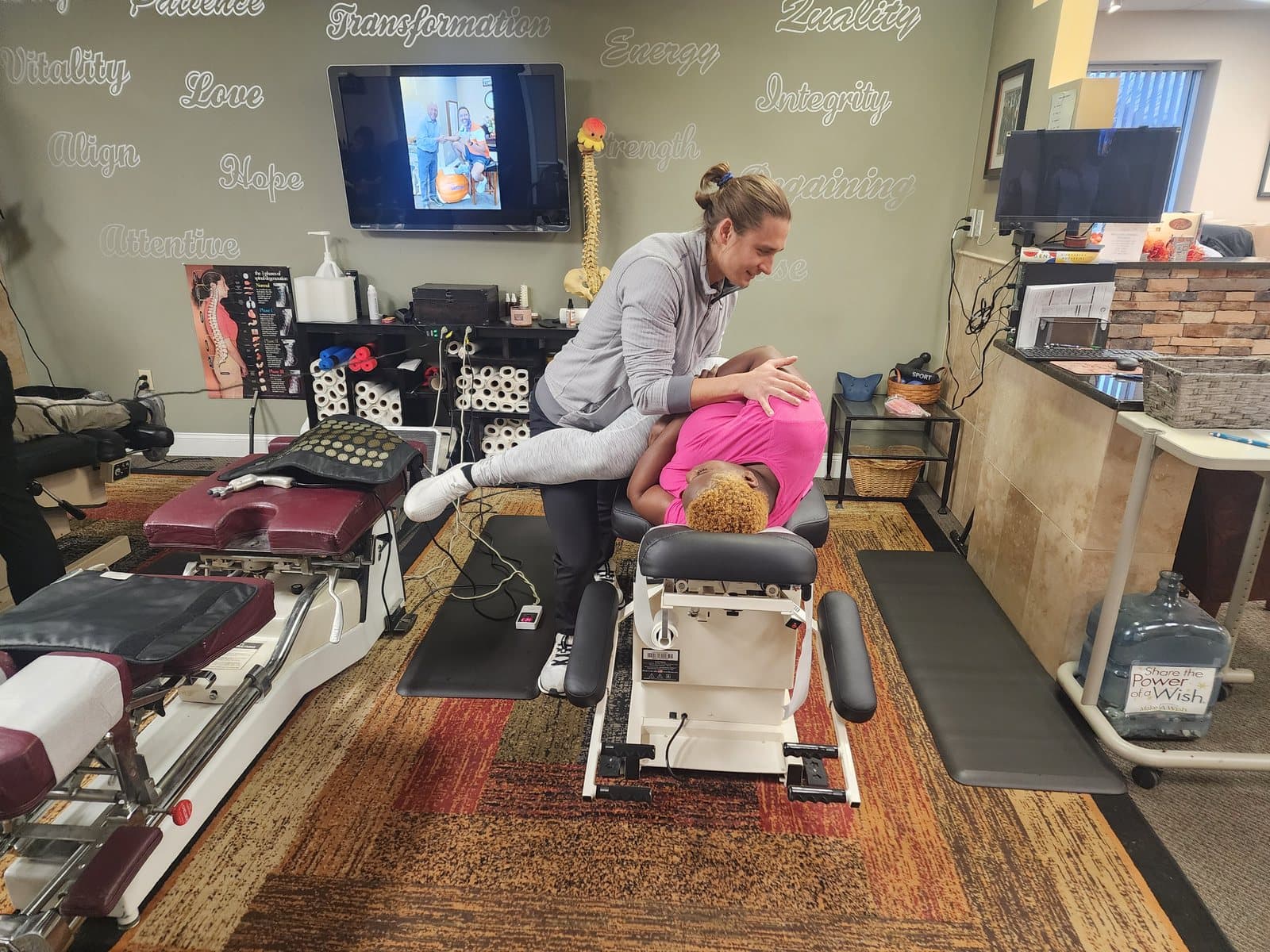
We start with a thorough exam to find exactly what was injured — not a five-minute look. From there we build a hands-on plan to reduce inflammation, restore motion, and rebuild the stability the injury took away. For accident patients, every visit is documented precisely, because your medical record is what your claim is built on.
- A thorough exam of the cervical spine, not a quick glance
- Hands-on care to restore motion and reduce muscle guarding
- A plan paced to the injury — early care, then rehabilitation
- Precise documentation from day one for your insurance claim
- Direct coordination with your attorney and auto insurer
Get checked within 72 hours
The sooner you're examined after a crash, the better the recovery picture — and a gap between the accident and your first visit is one of the first things an insurer will point to. If you were in an accident this week, call us.
Good to know
Common questions
How long does whiplash take to heal?
It varies with the severity of the injury and how quickly care starts. Many people improve over several weeks; some soft-tissue injuries take longer. We'll give you an honest picture after the exam rather than a number up front.
I felt fine at the scene — could I still have whiplash?
Yes, and that's the norm. Adrenaline masks pain at the scene, and whiplash symptoms commonly surface 24–72 hours later. Getting examined early is worth it even if you feel okay.
Will my auto insurance cover this?
Most accident patients pay nothing out of pocket — care is typically billed through PIP, or deferred through a letter of protection until your case settles. We'll explain your options clearly.
Do I need an attorney first?
No. You can start care right away. If you don't have an attorney and want one, we can point you to a trusted personal-injury lawyer.
This page is general education, not medical advice, and it isn't a substitute for an examination. Every case is different — the point of the first visit is to find out what's driving yours.
Let's find out what's actually causing it.
Same-week appointments in New Castle. A real exam with a real doctor — and we handle the insurance.