Sciatica is a symptom, not a diagnosis.
Pain shooting down the back of your leg means a nerve is being compressed or irritated somewhere. The useful question isn't "do I have sciatica" — it's what's pressing on it.
Call or text — a real person answers during office hours. Se habla español.
The sciatic nerve is the largest in the body, running from the low back through the buttock and down each leg. "Sciatica" describes what you feel when that nerve is compressed or irritated — pain, burning, tingling, or weakness traveling down the leg.
That's why sciatica is a symptom rather than a diagnosis. A disc, a joint, or a tight muscle can all irritate the nerve, and they don't get treated the same way. The exam exists to tell them apart.
What it can look like
- Pain radiating from the low back or buttock down one leg
- Burning, shooting, or electric-feeling pain
- Tingling or numbness in the leg or foot
- Weakness in the leg — a foot that catches or drags
- Pain that worsens with sitting, coughing, or sneezing
- Symptoms usually on one side rather than both
What compresses the nerve
- A bulging or herniated lumbar disc
- Restricted or degenerative joints in the low back
- Piriformis and deep hip muscle tightness
- Auto-accident and work injuries to the low back
- Prolonged sitting and postural loading
How we treat sciatica by finding the source of the compression
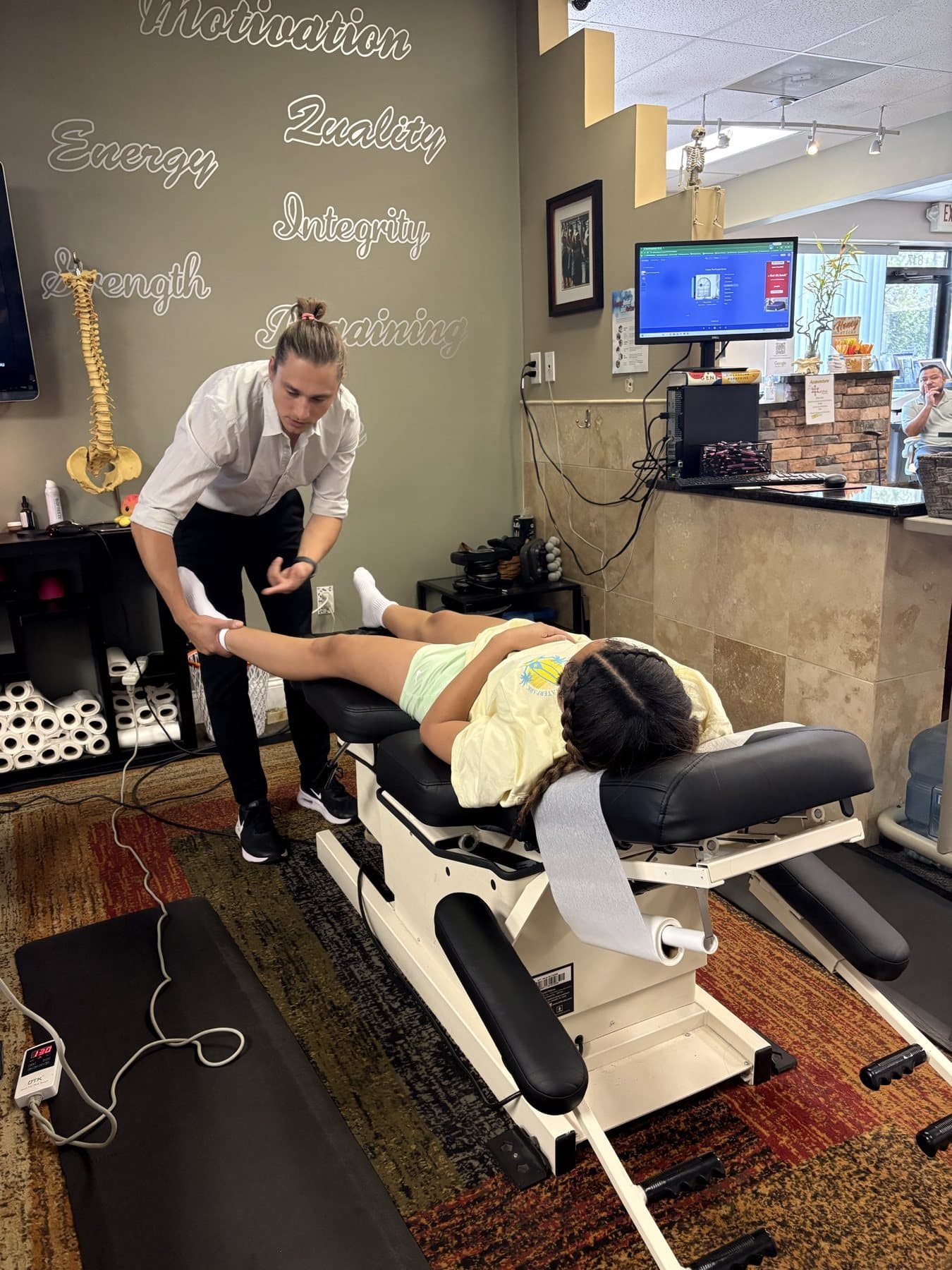
We examine to identify what's actually irritating the nerve — disc, joint, or muscle — because that answer changes the plan. Then hands-on care aimed at taking pressure off the nerve and restoring normal motion, plus what you should and shouldn't do between visits.
- An exam that localizes the source, including nerve testing
- Hands-on care to reduce the compression
- Flexion-distraction and other disc-appropriate techniques
- Guidance on movement, sitting, and activity between visits
- Referral onward if your exam suggests you need imaging or another specialist
When it's an emergency
Progressive weakness in the leg, or any loss of bowel or bladder control, needs immediate medical attention at an emergency department — not a chiropractic visit. That's rare, but it matters.
Good to know
Common questions
Can chiropractic help sciatica?
For sciatica driven by mechanical causes — a disc, a joint, or muscular compression — conservative care commonly helps. The exam tells us whether yours fits that picture, and we'll say so honestly if it doesn't.
Do I need an MRI first?
Usually not to start. We examine first; if your findings suggest imaging would change the plan, we'll refer you for it.
How long until it improves?
It depends on what's compressing the nerve and how long it's been going on. We'll give you an honest expectation after the exam and tell you if you're not responding the way we'd want.
This page is general education, not medical advice, and it isn't a substitute for an examination. Every case is different — the point of the first visit is to find out what's driving yours.
Let's find out what's actually causing it.
Same-week appointments in New Castle. A real exam with a real doctor — and we handle the insurance.